
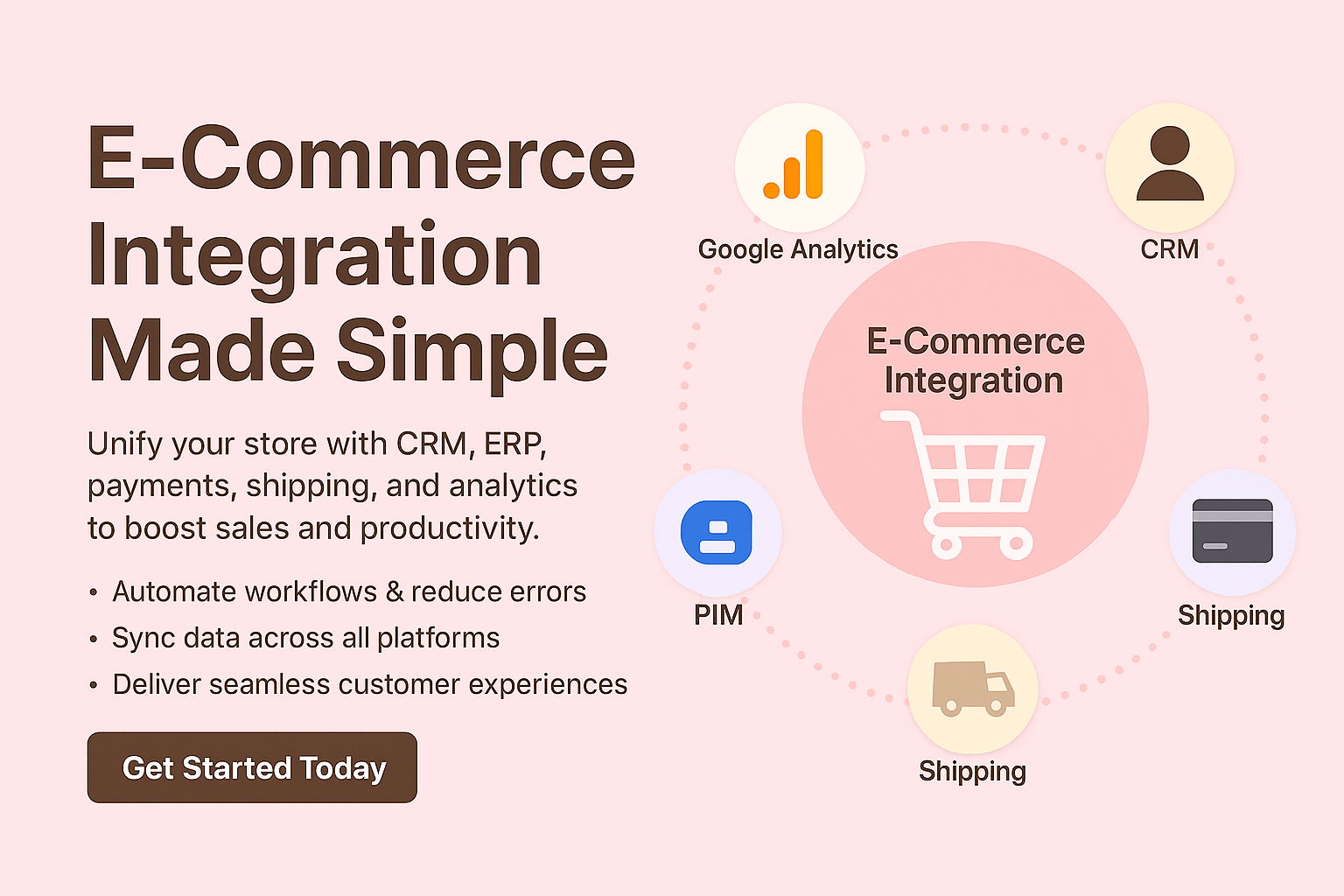
In the fast-paced world of online retail, a fragmented system slows you down, frustrates customers, and hurts your bottom line. That’s where e-commerce integration comes in – unifying your storefront, CRM, inventory tools, payment gateway, shipping systems, and marketing platforms into one seamless, automatable ecosystem.
What is e-commerce integration?
At its core, e-commerce integration means connecting an online store with backend systems and external tools. This ensures data flows freely between your storefront, ERP, CRM, payment provider, Shipping carriers, and marketing platforms – eliminating silos and manual entry. It’s the bridge that helps each party of your business talk to the others smoothly.
Key integrations every successful online store needs:
- Customer Relationship Management (CRM)
Sync order data and customer interactions into your CRM—whether Salesforce, HubSpot, or another—so your team can deliver personalized services and strategic follow-ups. - Enterprise Resource Planning (ERP)
Link inventory, pricing, and finances across your systems. When a sale happens, ERP updates automatically-no manual updates required. - Inventory & Order Management
Accurate stock data across channels is critical. Modern integrations update inventory in real time to minimize oversells and ensure smooth fulfillment. - Payment Gateways
Seamlessly integrate processors like Stripe, PayPal or others to streamline checkout and ensure order are captured instantly in your dashboard. This reduces abandonment rates and improves UX. - Shipping & Fulfillment Systems
Integrate carriers like DHL or UPS to automate shipping label creation, tracking updates, and order status changes. That means smoother delivery and fewer customer support tickets. - Marketing & Analytics Tools
Feed order and customer data into marketing tools for segmentation, automated promotions, and remarketing campaigns. Unified analytics tools help you track KPIs and conversion trends. - ERP, CM, Accounting Platforms (Unified Data Integration)
Use APIs or data integration platforms (like iPaaS) to ensure all systems are synced from accounting to CMS. This holistic approach reduces errors, saves time, and boosts team productivity.
Key Benefits of e-commerce integration.
- Automated workflows & efficiency
NO more manual order entry. Integrations sync data automatically, freeing your team to focus on high-impact tasks. - Eliminated data silos and improved visibility
All departments – from marketing to logistics =- have access to real-time, unified data. - Better customer experience = more sales
Faster order processing, accurate stock updates, and transparent shipping boost trust – resulting in more conversions and loyal customers. - Scalability and reduced errors
As your store grows, automated data flows adapt and keep everything running smoothly-without error-prone manual intervention.
A powerful e-commerce integration strategy isn’t a luxury – it’s a necessity. By connecting tools and syncing data, you reduce manual work, enhance customer experience, and set the stage for sustainable growth. Want help mapping your tech stack or selecting the right integration tools? We will be happy to assist you!